
If you are comparing ways to start online, you have probably noticed that every option sounds like the obvious choice when its own fans describe it. This article does not crown a winner. It gives you five questions to answer about yourself, then runs Wealthy Affiliate and the usual alternatives through each one.
One thing up front: this site promotes Wealthy Affiliate, and I earn a commission if you join through my link. That shapes what I write about, so I have also included a section on who Wealthy Affiliate is not right for. If your answers point somewhere else, that is a good result.
Why “which platform is best?” is the wrong first question
“Best” depends on what you need, and most beginners cannot say what they need yet. Without that, you end up comparing feature lists, and feature lists favor whichever option has the longest one.
A better first question is what kind of help you need to get from zero to a published site with a reason for people to visit. Some people need someone to set the order of tasks. Others already know what to do and want the cheapest tools. Others want to be on camera and don’t care about a website at first.
So the comparison below starts with you. Five questions, grouped under four headings, because teaching order and learning style belong together. Write your answers down as you go, even in a single word each. They matter more than anything I say about any platform.
What you’re really choosing between: all-in-one, piecing it together, or going it alone
Nearly every way to start online falls into one of three shapes.
All-in-one. One membership covers the lessons, the site-building tools, and a community to ask questions in. Wealthy Affiliate is this kind of option. You trade some flexibility for having fewer decisions to make.
Piecing it together. You buy a course on one topic, hosting from another company, a theme from a third, and maybe an email tool from a fourth. Each piece can be excellent. You are the one who makes them work together.
Going it alone on a single channel. This covers free blogging platforms, YouTube-first, and social-only. You pick one place, learn it by doing, and build there. The start is cheap and fast, but you are working inside someone else’s rules.

None of these is a mistake in itself. The question is which one fits how you work, and the next four sections help you find out.
Question 1: How much do you want taught, and in what order?
This section holds two questions. How much guidance do you want? And how do you like to learn?
If you want a sequence, with lessons that tell you what to do first, second, and third, an all-in-one option has an advantage. Wealthy Affiliate offers lessons and live classes alongside the tools, so what you learn and what you build sit in the same place. You can read a lesson on setting up a site and then set one up.
If you prefer to look things up when you hit a problem, the lesson sequence matters less to you. Free blogging platforms and YouTube-first both suit that style, because there is a huge amount of free material on both. The cost is that free material arrives in no particular order. A beginner can easily watch twenty videos on themes and never learn how a reader finds a site.
Piecing together separate courses sits in the middle. Each course teaches its own topic well, but nobody tells you which course to take first, or how the advice in one fits the advice in another. You have to build that map yourself.
How you like to learn matters too:
- You learn by watching: YouTube-first fits, as do all-in-one options with video lessons.
- You learn by reading: a blog-based path fits, since you will be writing a lot anyway.
- You learn by doing, then asking: look for somewhere with a community you can ask, whatever the platform.
- You learn from deadlines and other people: live classes and group spaces help more than a library of recordings.
Note which of those sounds most like you. If you were honest, you probably said you want a clear order and someone to ask. That points toward an all-in-one. If you said you are happy to figure it out and want to move fast, it points elsewhere.
Question 2: How many separate tools and logins are you willing to manage?
Every tool you add comes with a login, a bill, a settings page, and a way to break. For some people that is a pleasure. For a total beginner it is often where momentum quietly dies.

Here is how the options compare:
- Wealthy Affiliate: the teaching, site building, and community are in one membership, so there is less to connect.
- Free blogging platforms: very few tools, because the platform handles hosting and setup. The limit is what that platform lets you do.
- Separate courses and tools: the most logins and the most to connect. This also gives you the most freedom to choose the best tool for each job.
- YouTube-first: a few tools at the start (a camera, an editor, a channel), then more as you add a site or an email list.
- Social-only: the fewest tools, usually just the app itself.
Be honest about your tolerance. Someone who enjoys setting up systems may like choosing each part. Someone who gets stuck when two things do not work together will probably do better with fewer pieces.
If you are leaning toward building a site, the post on the three simple parts of building websites for beginners explains what you would be putting together, which helps you judge how much of that you want to handle yourself.
Question 3: Do you want to own your site, or rent space on someone else’s?
This is the question beginners skip, and it matters most over a long period.
On a free blogging platform, a social network, or YouTube, you are using someone else’s space. They set the rules, they can change how content is shown, and they can restrict or close an account. Your audience follows the platform, not you. That does not make these places bad. Plenty of people build real audiences on them. But you are building on ground you do not control.

A site on your own domain works differently. You choose the name, the design, and what goes on it. You can add an email list and link to whatever you like, as long as you follow the rules of the programs you promote. If a social platform changes its approach, your site stays where it is.
Here is how the options line up on ownership:
- Wealthy Affiliate: you build your own WordPress site, which is yours to run.
- Free blogging platforms: you get a site quickly, but the platform controls hosting and what you may do with it. Check each platform’s terms on affiliate links before you commit.
- Separate courses: depends on what you build, but you can end up owning everything if you buy your own hosting and domain.
- YouTube-first and social-only: you own nothing but the content you make and the habit of making it, unless you also point people to a site or an email list.
Ownership has a cost: a site takes more setup than an account on a social app, and it will not get traffic on its own. If your priority is to start posting this afternoon, renting space is faster. If you want something that is still yours in five years, owning is worth the extra effort.
Once you own a site, the way people find it matters. How Google decides what to rank is a good primer on that side of the work.
Question 4: What can you realistically give in weekly hours and monthly budget?
This is where optimism causes trouble. Pick the number you can sustain on your busiest week, not the number you hope to manage on your best one.
Start with time. Write down how many hours per week you can reliably protect. Two or three steady hours beat a plan for fifteen that falls apart after ten days. Slow early months are normal, and the post on why your online business feels slow in the first months covers how to keep showing up through them.
Then money. Free blogging platforms and social accounts cost nothing to open, though extras can add up later depending on the platform. Piecing together courses, hosting, a domain, and tools means several separate payments, and the total depends entirely on what you choose. Wealthy Affiliate has a free starter option, which lets you look around before paying anything. Check the current plans on their site for what a paid membership costs and includes, since I won’t quote prices that might have changed.
A few practical rules:
- Decide your monthly ceiling before you look at prices, not after.
- Count your time as a cost too. A cheap option that takes twice as long to set up is not cheap.
- Prefer options you can try without paying, so your first real spend comes after you know it fits.
- If an option asks for a large payment up front before you have tested anything, wait.
Low hours and a low budget are not a barrier. They simply rule out some shapes. With few hours, a narrow plan on one channel often works better than trying to run several.
Who Wealthy Affiliate is not the right fit for (said plainly)
Since I promote it, here is where I would not point you to it.
- You want to be on camera and build an audience there first. A YouTube-first path suits you better. A site can come later.
- You already know how to build and run a site. You may not need an all-in-one that teaches the basics, and you may prefer picking each tool yourself.
- You want a result without doing the work. No platform on this list does the writing, publishing, and promoting for you. Anything that claims otherwise deserves suspicion.
- You dislike writing. An affiliate site is built largely on written content. If you hate the idea, it will feel like a chore.
- You want to start posting today and nothing else. A social account or a free blog gets you there in an afternoon.
- You want certainty about income or timing. Nobody can promise either, and I won’t.
If two or three of those sound like you, treat that as useful information, not a failure.
How to test your choice this week before committing long term
You do not have to decide forever. You can run a small, cheap test over seven days and let the result tell you.
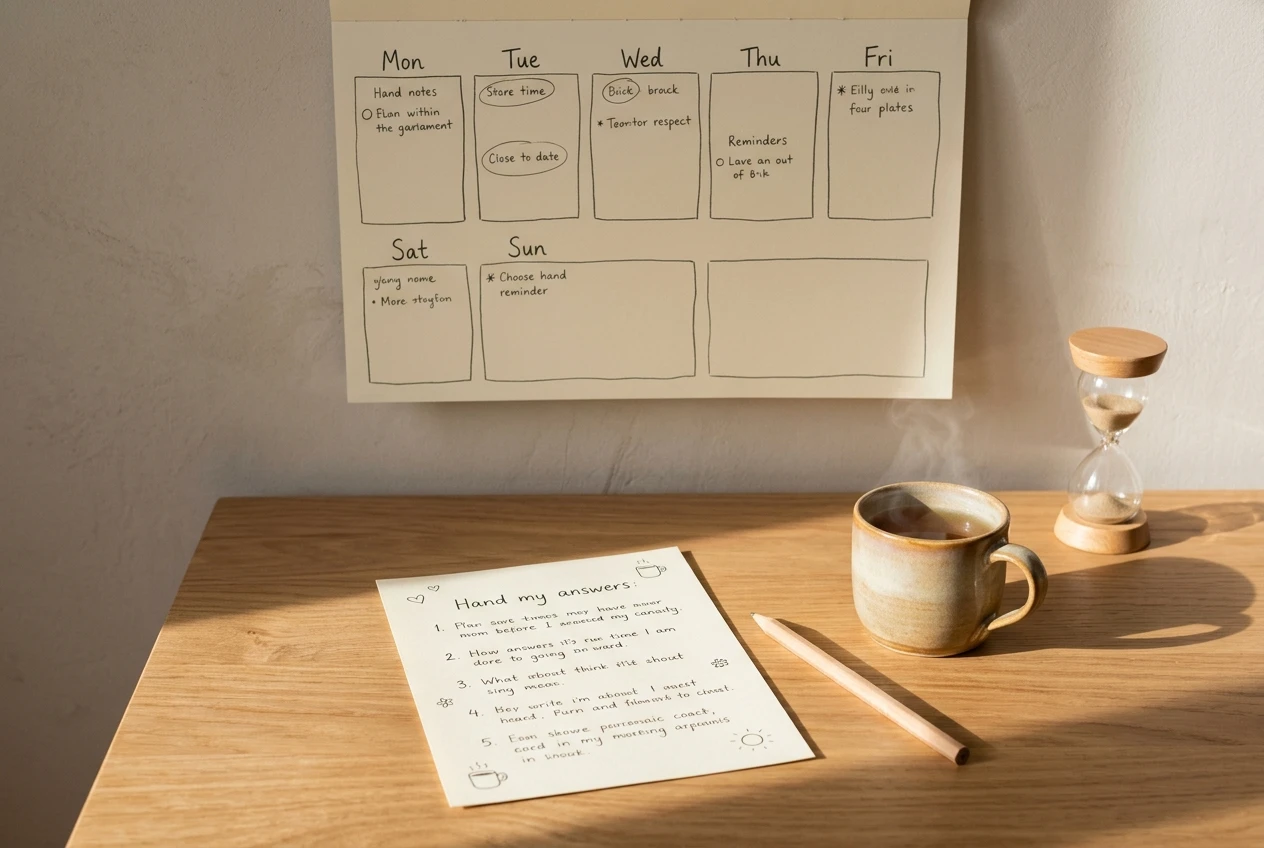
- Day 1: Write your answers to the five questions on one page, along with the hours and budget you can actually sustain.
- Day 2: Pick the one or two options that match most of your answers. Ignore the rest.
- Days 3 to 5: Spend your planned hours on the first real tasks of each option. For a site-based path, that means choosing a topic and setting up the basics. For a social or video path, it means making and posting a first piece.
- Day 6: Notice what felt easy, what you avoided, and where you got stuck. Avoidance tells you more than enthusiasm does.
- Day 7: Compare against your page. Did the option fit the answers you wrote, or did you find you wanted something different?
If you go the site route, you will need a topic to build around. How to choose your first niche without overthinking it will save you from stalling on that decision.
Whatever you test, give it a fair number of hours before judging. Three days of setup will feel slower than three days of posting, even if the setup is what pays off later.
A quick decision cheat sheet you can save to Pinterest
Answer each line, then read the right-hand side.
1. I want a set order and someone to ask. All-in-one, such as Wealthy Affiliate.
2. I prefer to learn from free material, on my own schedule. Free blogging platform or YouTube-first.
3. I enjoy choosing and connecting tools. Separate courses and tools.
4. I want the fewest logins possible. Free blogging platform, social-only, or an all-in-one.
5. I want to own my site and my list. Your own domain: Wealthy Affiliate or separate tools.
6. I want to start posting today. Social-only or a free blog.
7. I have a few hours a week and a tight budget. Pick one channel, try the free option first, and keep the plan narrow.
8. I hate writing. YouTube-first or social-only, and skip the affiliate blog for now.
If your answers point in several directions, go back to Question 3. Ownership is the one that is hardest to change later.
Try the free starter option and see where your answers land
If your answers lean toward an all-in-one with lessons, live classes, and a site you own, Wealthy Affiliate’s free starter option is a low-risk way to check that for yourself. Try Wealthy Affiliate’s free starter option through my referral link and compare what you find with your five answers. If it fits, good. If it does not, you have lost nothing but a few hours, and you know what to try next.
A reminder that I earn a commission if you join through that link, and you can read how that works on my affiliate disclosure page.
Whichever way you go, your first week online: what to do and what to skip lays out what to do next, so the first seven days go toward something that counts.