
Almost every beginner stalls at the same point: deciding what the first website should be about. There are thousands of possible topics, and every one of them seems to have a reason it might be the wrong choice. So you read another list of niche ideas, open another tab, and still have nothing picked.
This guide gives you a short process for how to choose a niche for beginners: two passes, three checks, and a firm deadline. By the end you will have a niche, five article ideas that show it works, and a clear next move.
Why picking a niche feels so hard (and why it matters less than you think)
The choice feels huge because it seems to decide everything that follows: your content, your audience, your income. Beginners often treat it as a permanent label, so they keep looking for the perfect answer.
There is no perfect answer, and you cannot find one by researching. You learn what a niche is like by writing in it. After ten articles you will know more about whether the topic suits you than any amount of planning can tell you now.

A niche is also easier to adjust than it looks. If you start with home cooking for busy people and find you enjoy the meal-planning side most, your next articles can lean that way. The site, the domain, the writing skills and the habits you build all carry over. Only the topic focus shifts.
So treat your first niche as a starting point. It needs to be good enough to begin, not right forever. The rest of this guide is a way to reach “good enough” in days instead of months.
Start with what you could talk about for a year
The first pass is about interest, because interest is what keeps a site alive. Most new sites are abandoned because the owner ran out of things to say or ran out of enthusiasm, not because the topic had no market.
Take a sheet of paper or open a blank note and list every subject you could write about for a year. Aim for 10 to 15. Include anything you follow, practice, read about, or keep wanting to understand better. Some prompts to get the list moving:

- Hobbies and activities you do regularly
- Problems you keep looking up answers to
- Subjects you read or watch videos about without being asked
- Skills you are working on, even if you are not good at them yet
- Parts of daily life you would like to do better, such as saving money, sleeping well or organizing a home
You do not need to be an expert. A topic you are learning can work well, because you can write for people a few steps behind you. What matters is that the subject holds your attention long enough to produce 50 or more articles.
Now cross out anything that fails a simple test: could you name ten different questions someone might ask about this? If you cannot, the topic is probably too narrow or too thin for you right now. Keep the rest. Six to eight candidates is a good number to carry into the second pass.
Three quick checks: do people search for it, buy in it, and ask questions about it
The second pass is a sanity check, not a market study. You are looking for signs that a topic has readers and has some way of earning money. Each check takes a few minutes per candidate.

Check 1: Do people search for it?
Type your topic into a search engine and look at the suggestions that appear as you type. Then scroll to the related searches at the bottom of the results page. If you see many different phrasings and specific questions, people are looking for this information. If the suggestions are sparse or repetitive, demand may be low.
Also look at who is ranking. A mix of large publishers and small independent sites suggests there is room for a new site. Results made up entirely of big brands deserve a closer look at narrower angles within the topic.
Check 2: Do people buy in it?
A site earns affiliate commissions when readers buy something or subscribe to something. So look for evidence of spending. Are there products, tools, courses, subscriptions or services connected to the topic? Do you see ads on the search results? Do other sites in the topic recommend specific products?
Then search for whether affiliate programs exist for those products. Many companies list their program on a page called something like “affiliates” or “partners”. If you find several programs, the topic has a route to income. If you find none after a fair search, mark that candidate down. Look at how affiliate marketing commissions actually get paid for the ins and outs
Check 3: Do people ask questions about it?
Questions are material for articles. Search for your topic on discussion forums, question-and-answer sites and the comment sections of popular videos. Real people asking “how do I…”, “which is better…”, or “why does my…” tells you what your site could answer.
For each candidate, give a score of 0 to 2 on each check: 0 for little sign, 1 for some, 2 for plenty. Total them. A candidate that scores 4 or more out of 6 is viable. You are not looking for a perfect 6.
Where interest and profit overlap, and what to do when they don’t
Lay your scored list next to your interest list. Ideally, the topic you enjoy most also has a solid score. When that happens, choose it and move on.
Often they do not line up. You might love a topic that scores 2 out of 6, or a topic with a score of 6 that bores you. Here is how to handle each case.
High interest, low score. Look for a nearby angle with more buying activity. If you love hand-lettering and the topic scores poorly, perhaps the audience wants to learn it, which opens up tools, courses and supplies. Narrowing to a specific reader, such as beginners who want to letter wedding invitations, can also surface clearer demand.

High score, low interest. Be careful with these. A topic you dislike will drain you by month three. If you can find a sub-topic within it that you can stand to write about, that may work. If not, drop it.
Middling on both. Pick the one with the larger number of article ideas you can already imagine. Since the niche can be adjusted later, a fairly good fit that you start on beats an ideal fit that you never begin.
This is also the point to remember what your site is for. If you are building an affiliate site, your monetization depends on readers having a reason to buy or subscribe. A topic where nobody ever spends money will be a hobby site, which is fine if that is the goal, but it will not produce commissions.
The two-day rule: how to stop analyzing and choose
Research has diminishing returns very quickly. After the first few hours, new information rarely changes which candidate wins; it only gives you more reasons to doubt. A deadline prevents that.
Use this rule:

- Day one: Build your interest list and run the three checks on each candidate. Write the scores down. Stop when the list is scored.
- Day two: Review the scores in one sitting. Choose the candidate with the best combination of interest and score. If two are tied, choose the one you could more easily write ten articles about this week.
Then write the name of your niche at the top of a page and treat the decision as made. Do not reopen the list. Do not start another round of research “just to be sure”. If a new idea appears, write it in a separate note called “later” and keep going.
The rule works because the cost of a slightly imperfect pick is small and the cost of not choosing is large. Every week spent deciding is a week with no site and no articles. If it turns out you chose poorly, you will find out by writing, which is the fastest way to find out anyway.
Test your pick with five article ideas before you commit
Before you build anything, run one last test. Write down five specific article titles for your chosen niche. They should be specific enough that a reader would know exactly what they will get, such as “How to choose a beginner-friendly slow cooker” instead of “Slow cookers”.
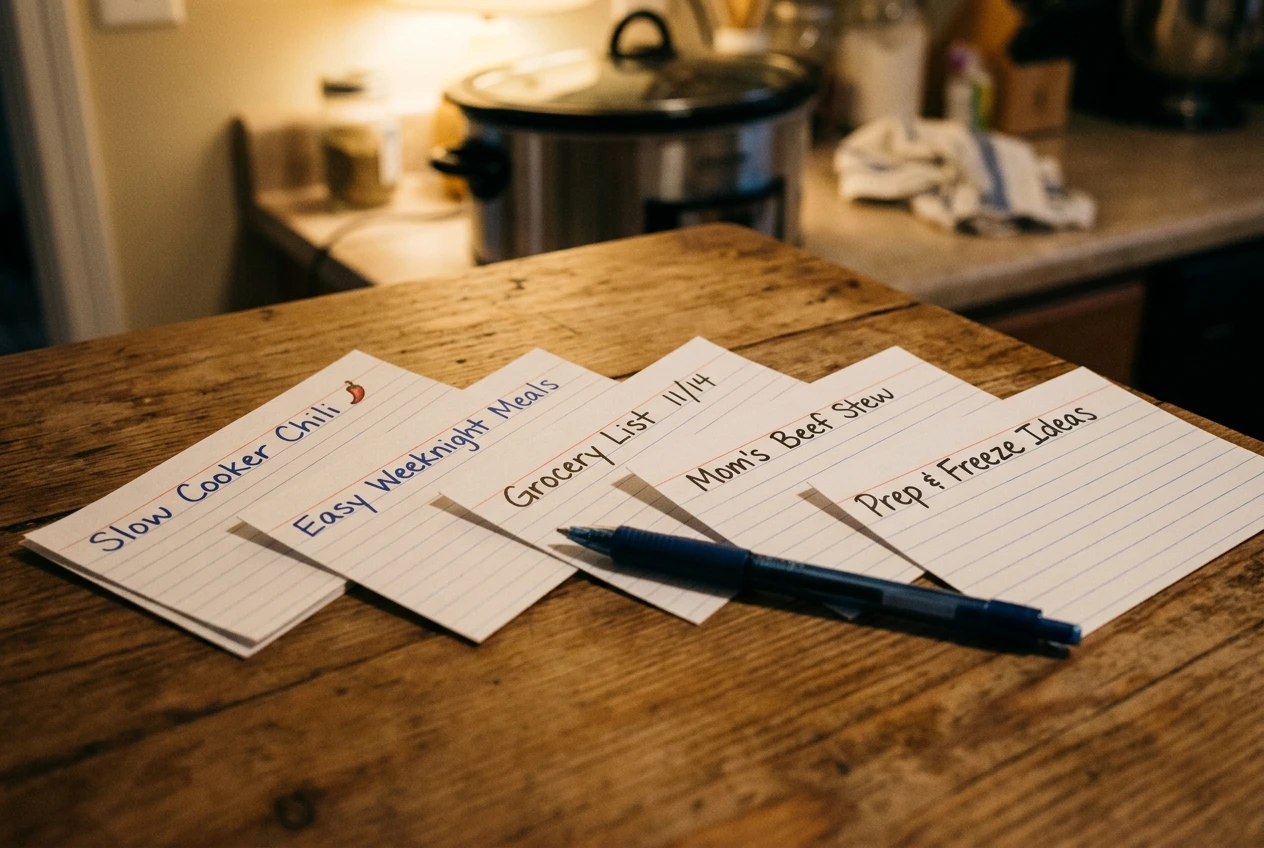
Give yourself 15 minutes. Here is how to read the result:
- Five titles come easily. The niche has room. Proceed.
- You get three or four and then stall. That is still a pass. Many more ideas will show up once you start researching keywords and reading what others in the niche write.
- You struggle to get past two. The topic may be too narrow or too unfamiliar. Go back to your scored list and take the runner-up through the same test.
A good set of five titles usually mixes types: a question people ask, a comparison of two options, a beginner’s guide, a problem and its fix, and a recommendation for a certain kind of reader. If all five of yours are the same type, vary them. Doing so also shows you how many directions the niche offers.
Keep this list. These five titles become the first entries in your content plan.
What to do after choosing: your next steps toward a first site
With a niche chosen and five article ideas in hand, the work becomes concrete. In order:
- Name the site’s focus in one sentence. For example: “This site helps [type of reader] do [specific thing].” Write it for yourself; it keeps later decisions consistent.
- Pick a domain name. Choose something short and easy to say aloud that fits the niche without locking you into one narrow corner of it. A name that is a little broader leaves room to adjust.
- Set up your website. A basic WordPress site with a clean theme is enough to start. You can refine the design later. When your ready check out the three simple parts of building a website.
- Write your first article from your five ideas. Pick the one you feel most ready to write. Publishing the first piece matters more than making it perfect.
- Keep a running list of new ideas. Questions from readers, forum threads and search suggestions will keep feeding it.
If you want a wider view of how all these pieces connect, our guide to how to start an online business from scratch covers the full path from idea to a growing site.
The niche decision is the first of many you will make, and none of the later ones will be as final as it feels today. You will adjust as you learn what your readers want and what you enjoy writing. What you need now is a topic, five titles and a start date.
Ready to turn your niche into a real website? Start free with Wealthy Affiliate and build your first site step by step, with lessons and a community of members who have been where you are. Then read our first-week guide, Your First Week Online: What to Do and What to Skip, to plan what comes next.